
Data engineering has evolved rapidly over the last few years. Earlier, companies mainly depended on traditional on-premise infrastructure to store and process data. Today, many organizations are moving toward cloud platforms like AWS because of flexibility, scalability, and faster deployment.
Still, both On-Premise and AWS environments are widely used in real-world data engineering projects.
In this article, we will understand the difference between On-Premise systems and AWS cloud platforms, how data engineers work in both environments, and why learning an On-Premise course along with AWS skills can help build a strong career in data engineering.
What Is On-Premise Infrastructure?
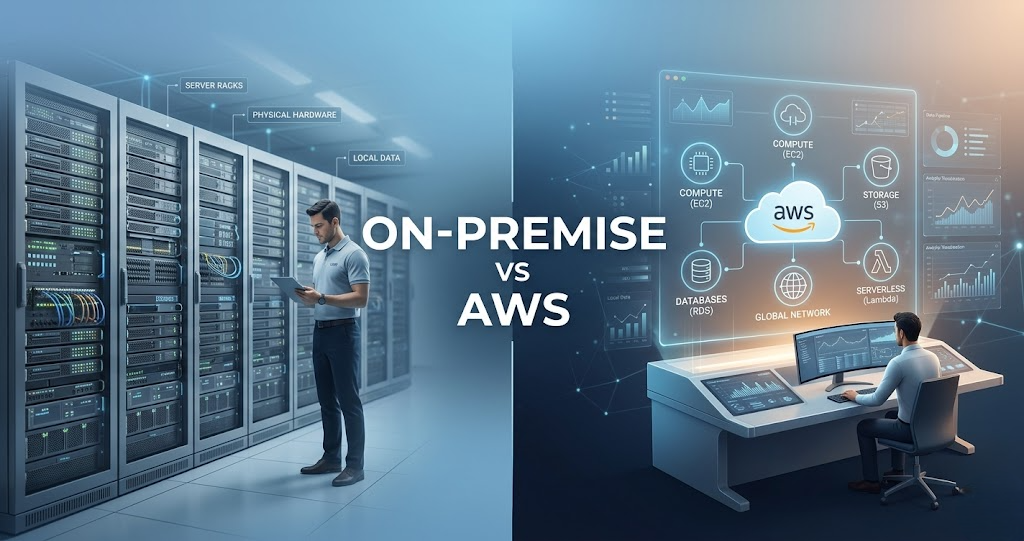
On-Premise infrastructure means all servers, storage systems, databases, and networking devices are managed inside the company’s own physical data center.
Traditional enterprises, banks, healthcare companies, and government organizations often prefer on-premise systems because they want complete control over their data and security.
In an on-premise environment, data engineers handle:
- Database management
- ETL pipeline development
- Server monitoring
- Data storage systems
- Security and backup processes
Although on-premise systems offer better control, they require expensive hardware and maintenance teams.
What Is AWS in Data Engineering?
AWS (Amazon Web Services) is a cloud platform that allows companies to store, process, and analyze data without maintaining physical infrastructure.
Instead of purchasing servers, organizations can use cloud services whenever needed.
Popular AWS services used in data engineering include:
- Amazon S3
- AWS Glue
- Redshift
- EMR
- Lambda
- Kinesis
AWS helps companies scale quickly while reducing infrastructure costs.
Modern startups and technology companies heavily rely on AWS because deployment and scaling become much easier.
Major Differences Between On-Premise and AWS
The biggest difference is infrastructure management.
In on-premise systems, companies manage hardware manually. In AWS, cloud services handle most infrastructure operations automatically.
Scalability is also different.
On-premise systems require additional hardware purchases when data grows, while AWS resources can scale instantly.
Cost structure varies as well.
On-premise setups require high upfront investment, whereas AWS follows a pay-as-you-use pricing model.
AWS also provides faster deployment compared to traditional data center environments.
Which Skills Should Data Engineers Learn?
In 2026, cloud knowledge is becoming extremely important for data engineering careers.
Most companies now expect engineers to understand AWS services, cloud ETL pipelines, big data processing, and real-time streaming systems.
At the same time, understanding traditional infrastructure is also valuable because many enterprises still use hybrid environments.
Learning both cloud and traditional systems gives better career opportunities.
A good learning path includes:
- On-premise architecture basics
- AWS cloud services
- ETL pipelines
- Data warehousing
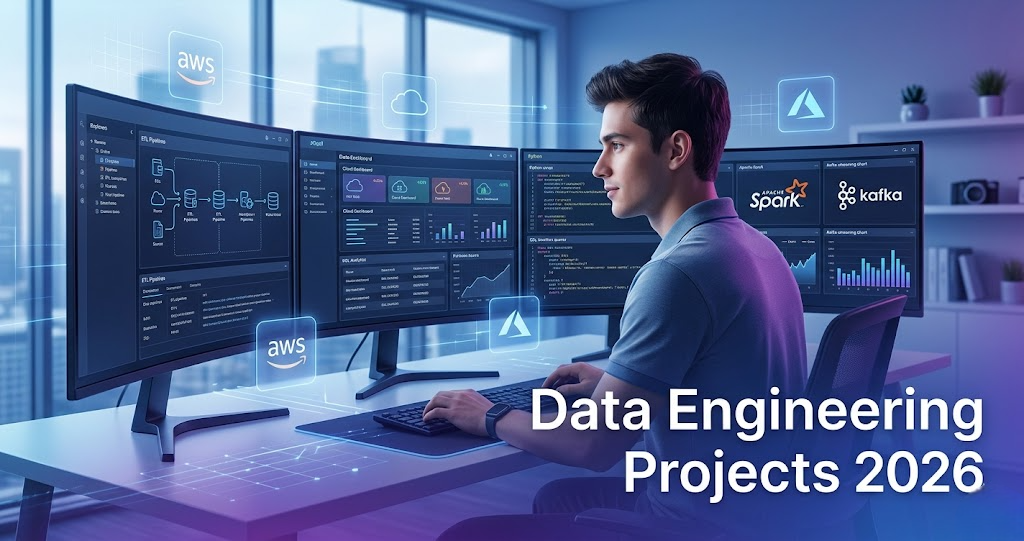
- Apache Spark and Kafka
- SQL and Python
Both On-Premise infrastructure and AWS cloud platforms are important in modern data engineering.
Traditional organizations continue using on-premise systems for compliance and security, while modern companies prefer AWS for scalability and flexibility.
For aspiring data engineers, learning both environments can create strong job opportunities in 2026 and beyond.