
Data engineering is changing rapidly as companies generate huge amounts of data every day. From mobile applications and payment systems to streaming platforms and cloud applications, businesses now depend on fast and scalable data systems.
Traditional servers alone are no longer enough to handle modern data workloads efficiently. This is why cloud computing has become one of the most important technologies in data engineering.
In this article, we will understand why cloud computing is important for data engineers, how companies use cloud platforms, and which cloud skills are valuable in 2026.
What Is Cloud Computing?
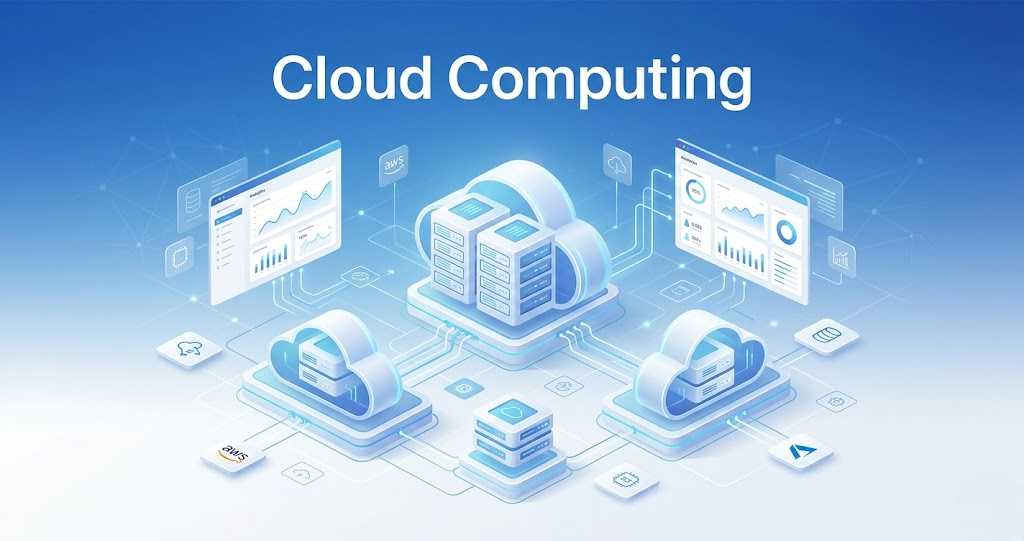
Cloud computing means using internet-based services for storing, processing, and managing data instead of relying only on physical servers.
Cloud platforms provide resources like:
- Storage
- Databases
- Virtual machines
- Data pipelines
- Analytics systems
- Machine learning services
Popular cloud providers include AWS, Microsoft Azure, and Google Cloud Platform.
These platforms allow companies to scale infrastructure quickly without purchasing expensive hardware.
Why Data Engineers Use Cloud Platforms
Modern businesses process massive amounts of structured and unstructured data every second.
Cloud computing helps data engineers build scalable systems capable of handling this growing data efficiently.
Instead of manually managing servers, engineers can focus on building ETL pipelines, analytics systems, and real-time processing architectures.
Cloud platforms also improve deployment speed and reduce infrastructure maintenance costs.
Common Cloud Services Used in Data Engineering
Data engineers use several cloud services daily.
Storage services like Amazon S3 and Azure Data Lake help manage large-scale datasets.
ETL services such as AWS Glue and Azure Data Factory automate data movement and transformation.
Big data tools like Databricks, EMR, and BigQuery process huge datasets efficiently.
Streaming services including Kafka, Kinesis, and Pub/Sub support real-time data pipelines.
These services make cloud computing highly important in modern data engineering projects.
Benefits of Cloud Computing
One major advantage is scalability.
Cloud platforms allow companies to increase or reduce resources instantly depending on workload requirements.
Another benefit is cost optimization.
Businesses only pay for the services they use instead of investing heavily in physical infrastructure.
Cloud systems also provide better reliability, backup management, and disaster recovery solutions.
Cloud computing has become a core part of modern data engineering.
Companies worldwide are migrating toward cloud platforms to process massive amounts of data efficiently and support real-time analytics systems.
For aspiring data engineers, learning cloud technologies like AWS, Azure, and Google Cloud can create excellent career opportunities in 2026 and beyond.
Understanding cloud computing, ETL pipelines, and big data processing together can help build a strong foundation for a successful data engineering career.