
In modern data engineering, managing and transforming data efficiently has become very important. Many companies are now dealing with large amounts of data, and traditional methods of handling data transformations are no longer enough.
This is where DBT comes in.
DBT, which stands for Data Build Tool, is becoming one of the most popular tools in data engineering in 2026. It helps data engineers transform raw data into clean, reliable, and analysis-ready data directly inside data warehouses.
In this blog, you will understand what DBT is, how it works, and why more data engineers are using it.
What is DBT?
DBT is a tool used for transforming data inside a data warehouse. Instead of moving data to another system for processing, DBT works directly where the data is stored.
In simple terms, DBT allows you to write SQL queries to transform raw data into useful tables that can be used for reporting and analysis.
It focuses only on transformation, which is the “T” in ELT (Extract, Load, Transform). Data is first loaded into the warehouse, and then DBT is used to clean and organize it.
This approach is faster and more efficient compared to older ETL methods.
Why DBT is Important in Modern Data Engineering
As companies move to cloud data platforms like Snowflake, BigQuery, and Redshift, the way data is processed has changed. Instead of processing data outside, transformations now happen inside the warehouse.
DBT fits perfectly into this modern approach.
It helps teams manage data transformations in a structured and organized way. Data engineers can build reusable models, track changes, and maintain data quality without creating complex pipelines.
Because of this, DBT has become an essential tool in modern data workflows.
Key Features of DBT
DBT offers several features that make data engineering easier and more efficient.
- SQL-based transformations: You can write simple SQL instead of complex code
- Modular models: Break large transformations into smaller steps
- Version control: Manage changes using Git
- Testing: Validate data quality with built-in tests
- Documentation: Automatically generate documentation
- Dependency management: Understand how data models are connected
These features help teams build reliable and scalable data systems.
How DBT Works in Data Pipelines
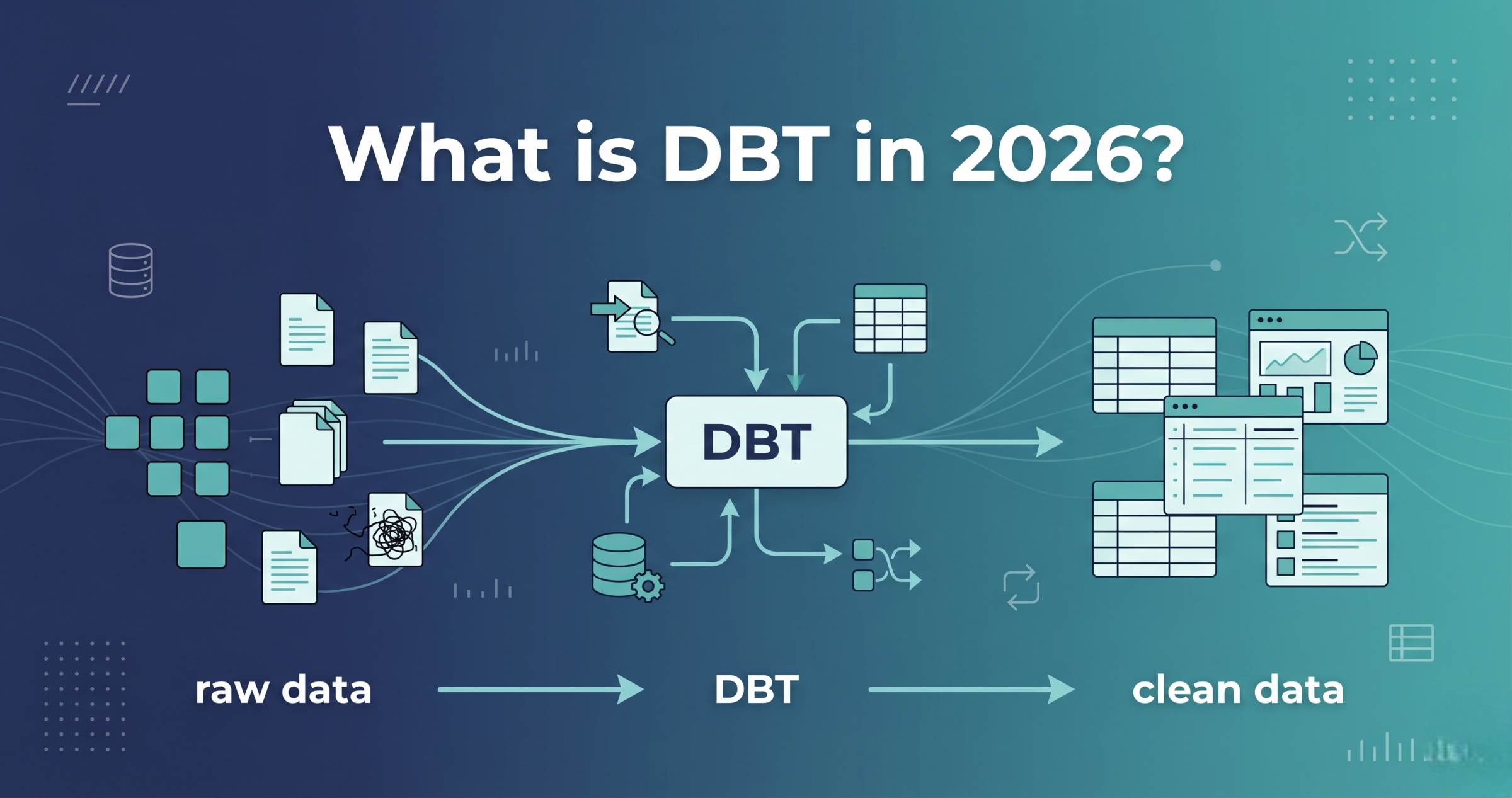
In a typical modern data pipeline, data is first collected from different sources and loaded into a data warehouse. After that, DBT is used to transform the data.
The process looks like this:
Data is ingested into the warehouse → DBT transforms the data → Clean data is used for analytics and reporting
DBT runs SQL models in a sequence, ensuring that each step depends on the previous one. This creates a clear and organized data flow.
Why Data Engineers Are Using DBT in 2026
There are several reasons why DBT is widely used by data engineers today.
First, it simplifies data transformation. Instead of writing complex code, engineers can use SQL, which is easier to learn and use.
Second, it improves collaboration. Teams can work together using version control, making it easier to track changes and avoid errors.
Third, it ensures data quality. With built-in testing, engineers can catch issues early before they affect reports.
Fourth, it supports scalability. DBT works well with cloud data platforms, making it suitable for large-scale data systems.
Because of these advantages, DBT has become a standard tool in many data teams.
DBT vs Traditional ETL
Traditional ETL tools process data outside the warehouse, which can be slower and more complex. They often require separate systems and additional maintenance.
DBT follows the ELT approach, where data is loaded first and transformed later inside the warehouse. This reduces complexity and improves performance.
Compared to traditional ETL, DBT is simpler, faster, and more efficient for modern data environments.
When Should You Learn DBT?
If you are planning to build a career in data engineering, learning DBT can be very helpful. It is especially useful if you are working with cloud data platforms or modern data stacks.
You should consider learning DBT if you:
- Work with SQL regularly
- Want to build clean and structured data pipelines
- Are using tools like Snowflake or BigQuery
- Want to improve data quality and workflow
Learning DBT can make you more valuable in the job market.
DBT has become an important tool in modern data engineering. It simplifies data transformation, improves data quality, and helps teams build scalable data pipelines.
As data continues to grow and cloud platforms become more popular, tools like DBT will play a key role in managing data efficiently.
If you want to stay relevant in the data field in 2026, learning DBT is definitely a smart choice.