
For many years, Hadoop was one of the most popular technologies in big data processing. Companies used Hadoop to store and process huge amounts of data across distributed systems. It played a major role in the growth of data engineering and big data analytics.
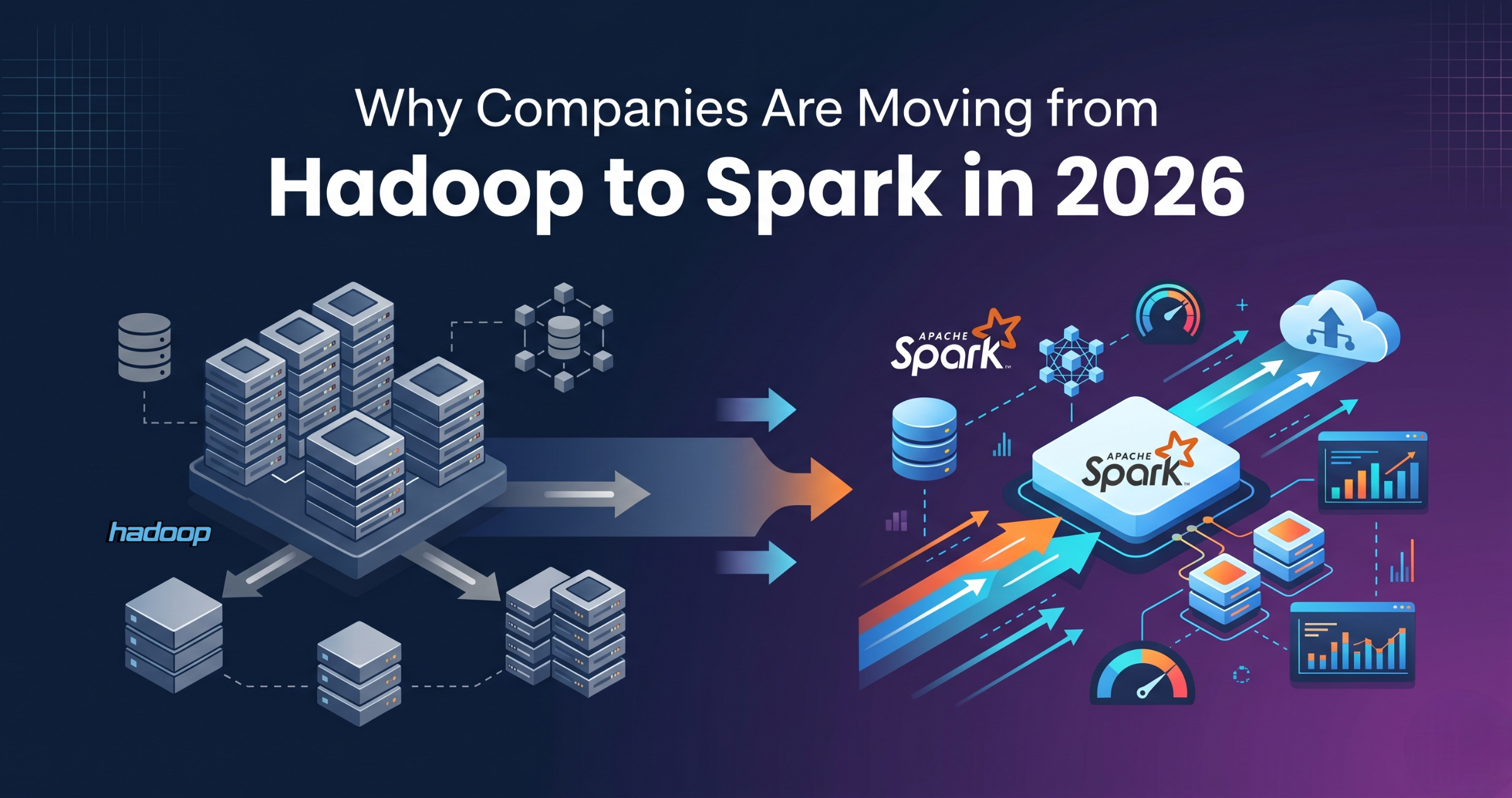
However, in 2026, many companies are slowly moving away from Hadoop and adopting Apache Spark instead. The reason is simple modern businesses need faster processing, better performance, and support for real-time data systems.
In this blog, you will understand why companies are moving from Hadoop to Spark and why Spark has become one of the most important tools in modern data engineering.
What is Hadoop?
Hadoop is an open-source framework used for storing and processing large datasets. It uses distributed storage and distributed processing to handle big data across multiple systems.
Hadoop mainly works using:
- HDFS (Hadoop Distributed File System) for storage
- MapReduce for processing data
For many years, Hadoop was the standard solution for big data systems.
What is Apache Spark?
Apache Spark is also a distributed data processing framework, but it is designed to process data much faster than Hadoop MapReduce.
Spark processes data in memory, which makes it significantly faster. It also supports:
- Batch processing
- Real-time streaming
- Machine learning
- SQL processing
Because of this flexibility and speed, Spark has become highly popular in modern data engineering.
Why Companies Are Moving from Hadoop to Spark
One of the biggest reasons companies are moving to Spark is performance. Hadoop MapReduce processes data by reading and writing to disk multiple times, which makes it slower.
Spark uses in-memory processing, reducing processing time significantly. This helps companies handle large datasets much faster.
Another major reason is real-time processing. Modern businesses need real-time analytics and faster decision-making. Hadoop is mainly designed for batch processing, while Spark supports both batch and real-time data processing.
Spark is also easier to use for developers. It supports multiple languages like Python, Scala, and SQL, making development faster and more flexible.
Companies also prefer Spark because it integrates well with modern cloud platforms like AWS, Azure, and GCP. As businesses move to cloud-based systems, Spark fits naturally into modern architectures.
Hadoop vs Spark: Key Differences
Hadoop and Spark both process big data, but they work differently.
Hadoop:
- Disk-based processing
- Slower execution
- Mainly batch processing
- More complex development
Spark:
- In-memory processing
- Faster execution
- Supports real-time processing
- Easier development and better flexibility
Because of these advantages, Spark is becoming the preferred choice for modern data systems.
Real-World Use Cases
Many companies now use Spark for:
- Real-time analytics
- Streaming applications
- Machine learning pipelines
- Large-scale ETL systems
Industries like e-commerce, finance, healthcare, and streaming platforms rely heavily on Spark because they need fast and scalable processing.
Is Hadoop Still Used?
Even though Spark is growing rapidly, Hadoop is not completely gone. Some companies still use Hadoop storage systems like HDFS.
In many cases, Spark actually runs on top of Hadoop infrastructure. So Hadoop still exists in some environments, but Spark is becoming the main processing engine.
Why Learning Spark is Important in 2026
For anyone planning a career in data engineering, Spark has become a must-have skill. Many job descriptions now require Spark knowledge because companies are actively using it in production systems.
Learning Spark helps you:
- Work with large-scale data systems
- Build modern data pipelines
- Process streaming data
- Improve career opportunities
As more companies move to modern cloud and real-time architectures, Spark skills are becoming more valuable.
Common Mistakes Beginners Make
Many beginners focus only on Hadoop because it was popular in the past. However, modern data engineering is moving toward Spark-based systems.
Another mistake is trying to learn advanced Spark concepts before understanding basics like SQL and data pipelines. Building strong fundamentals first makes learning easier.
Companies are moving from Hadoop to Spark because modern data systems require faster processing, real-time capabilities, and better scalability.
While Hadoop played an important role in big data history, Spark is becoming the preferred choice for modern data engineering in 2026. Its speed, flexibility, and cloud compatibility make it ideal for today’s business needs.
If you want to build a strong career in data engineering, learning Apache Spark is one of the smartest decisions you can make today.