

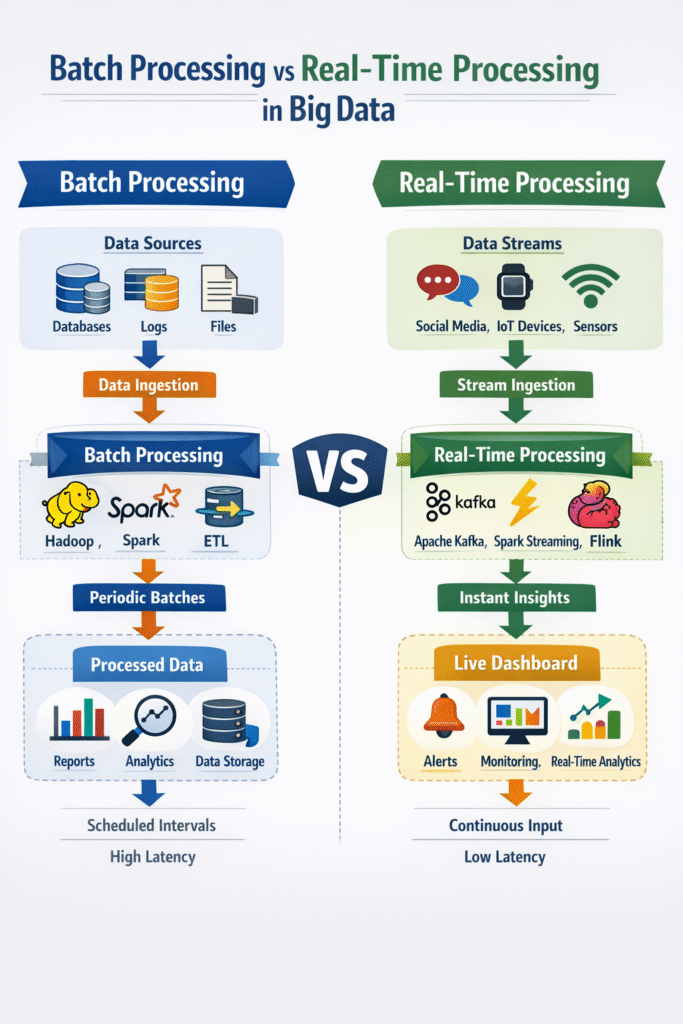
Batch vs Real-Time Processing – Difference, Examples, and Use Cases
Introduction
Trying to understand batch vs real-time processing but getting confused?
You’re not alone.
Most people:
- Hear batch processing in data pipelines
- Hear real-time processing in streaming systems
- See both used in projects
But when asked the difference in real systems, they get stuck.
Because knowing definitions is not equal to understanding how data is processed.
In this blog, you’ll understand:
- What batch processing is
- What real-time processing is
- Key differences
- When to use each
Batch vs Real-Time Processing in One Line
Batch processing handles large volumes of data at scheduled intervals, while real-time processing handles data instantly as it arrives.
What is Batch Processing?
Batch processing means processing data in bulk.
Data is collected over time and processed together.
In simple terms:
Data is processed after some delay.
Batch Processing Flow
- Data is collected
- Stored in system
- Processed at scheduled time
Example:
Daily sales report processed at midnight.
What is Real-Time Processing?
Real-time processing means processing data instantly.
Data is processed as soon as it arrives.
In simple terms:
Data is processed immediately.
Real-Time Processing Flow
- Data is generated
- Processed instantly
- Output is available immediately
Example:
Payment transaction processing.
Batch vs Real-Time Processing Difference
Batch Processing:
- Processes data in bulk
- Runs on schedule
- High latency
Real-Time Processing:
- Processes data instantly
- Runs continuously
- Low latency
Batch vs Real-Time Processing
Batch:
- Delayed processing
- Large datasets
- Cost efficient
Real-Time:
- Immediate processing
- Continuous data flow
- More complex
Batch vs Real-Time Example
Batch Example:
- Logs collected throughout the day
- Processed at night
- Reports generated
Real-Time Example:
- User clicks website
- Event processed instantly
- Recommendation shown
When to Use Batch Processing
Use batch when:
- Data is not time-sensitive
- Processing large volumes
- Cost optimization is needed
When to Use Real-Time Processing
Use real-time when:
- Immediate results are required
- Handling live data
- User-facing systems
Why Both are Used Together
In real projects, both are used.
Flow:
- Real-time handles live data
- Batch handles historical data
Real-World Example
E-commerce pipeline:
Real-Time:
- Track user activity
- Show recommendations
Batch:
- Generate daily reports
- Analyze trends
Common Mistakes
- Using real-time when batch is enough
- Ignoring latency requirements
- Not understanding use case