
Spotify and YouTube process massive amounts of streaming data every second to deliver recommendations, analytics, and smooth user experiences. Every second, millions of users stream songs on Spotify and videos on YouTube. What feels instant to users is actually powered by massive real-time data engineering systems working continuously in the background.
Whenever someone plays a song, skips music, watches a video, searches for content, or clicks a recommendation, streaming events are generated immediately. These events are processed within seconds to improve recommendations, monitor performance, personalize feeds, and deliver smooth streaming experiences.
Modern streaming platforms cannot wait hours to process data in batches. User behavior changes every second, and platforms must respond instantly. This is why companies like Spotify and YouTube heavily depend on real-time data processing technologies.
What Is Real-Time Streaming Data?
Real-time streaming data refers to continuously generated information that is processed instantly as it arrives.
For streaming platforms, data flows constantly from mobile apps, smart TVs, desktops, advertisements, recommendation engines, and user interactions. Instead of storing data first and processing it later, systems analyze events immediately.
This allows platforms to react quickly and improve user experiences in real time.
How Spotify Uses Real-Time Data
Spotify handles billions of streaming events daily from users around the world. Every user interaction creates live data that flows through distributed streaming systems.
When users listen to music, Spotify instantly tracks listening behavior, song preferences, skips, playlist activity, and search patterns. This helps the platform generate personalized recommendations such as Discover Weekly and Daily Mix playlists.
Spotify also uses live data to identify trending songs and monitor regional listening activity. If a song suddenly becomes popular, Spotify systems can detect the trend immediately and promote it to more users.
Another major use of streaming data is advertisement targeting. Spotify analyzes user activity in real time to deliver relevant audio advertisements based on listening patterns and engagement.
To handle these workloads, Spotify uses technologies like Apache Kafka, Apache Flink, Kubernetes, and cloud-based analytics systems.
How YouTube Processes Streaming Events
YouTube receives enormous amounts of streaming data every second from billions of video views globally.
Whenever users watch videos, pause content, like videos, comment, or subscribe to channels, live events are generated continuously. These events help YouTube improve recommendations and maintain platform quality.
One of YouTube’s most important systems is its recommendation engine. As users interact with videos, machine learning models instantly analyze viewing history, watch time, and engagement behavior to suggest more relevant content.
YouTube also processes streaming data for creator analytics. Content creators can see near real-time updates about views, audience retention, engagement, and subscriber growth.
In addition, YouTube uses streaming systems to detect spam, fake views, suspicious activity, and policy violations quickly before they impact the platform.
Google technologies such as Pub/Sub, Dataflow, Bigtable, and TensorFlow help power YouTube’s real-time infrastructure.
Technologies Behind Streaming Platforms
Streaming companies rely on distributed data engineering systems to process high-speed events efficiently.
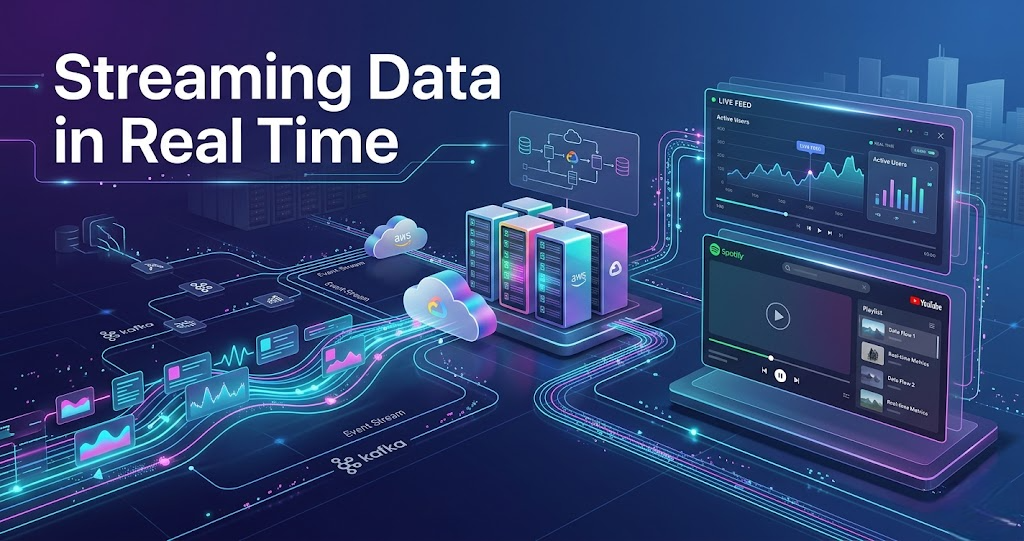
Apache Kafka is commonly used for collecting and transporting streaming events between services. Frameworks like Apache Flink and Spark Streaming process data continuously with very low latency.
Cloud platforms such as AWS, Azure, and Google Cloud provide scalable infrastructure capable of handling billions of events daily.
Machine learning systems also play a major role by analyzing live user behavior and improving personalization continuously.
Challenges in Real-Time Streaming Systems
Processing streaming data at global scale is extremely challenging. Platforms must maintain low latency while handling billions of events from users worldwide.
Infrastructure must scale automatically during traffic spikes while ensuring system reliability and fault tolerance. Even small delays can negatively impact recommendations, analytics, and user experience.
Data consistency is another major challenge because information is generated simultaneously from millions of devices and locations.
Why Real-Time Data Engineering Matters
Real-time data engineering is the foundation of modern streaming platforms. Without it, recommendations would become outdated, analytics would be delayed, and users would experience slower and less personalized services.
Streaming systems allow companies to understand user behavior instantly and respond continuously with better recommendations, smoother playback, and improved engagement.
Spotify and YouTube are excellent examples of how modern companies use real-time data engineering at massive scale. Every interaction on these platforms generates streaming events that are processed instantly using technologies like Kafka, Flink, Spark Streaming, cloud infrastructure, and machine learning systems.
As streaming platforms continue growing in 2026 and beyond, real-time data engineering will remain one of the most important skills for future data engineers.